
The Superocean Heritage 40 takes the visual vocabulary of a dive watch and gives it a more restrained profile than many oversized tool watches. The case diameter is only one part of that effect. The bezel’s width, the length of the lugs and the way the strap meets the case all influence whether the design feels compact or bulky. Those proportions are particularly revealing when judging a Breitling Superocean Heritage 40 replica from photographs.
Comparing Superocean variants starts with their bezels. A broad insert changes the apparent dial opening and the hands have to remain visible against the markers. Straps and bracelets then change how utilitarian or restrained the same case looks.
The Heritage collection differs from the modern Superocean line in its visual priorities. Rather than concentrating every element on assertive tool-watch styling, it relies on a familiar round dial, prominent but controlled hands and a bezel with clear timing information. This can make a replica look persuasive from a distance, although more detailed comparison often reveals different typography or bezel geometry.
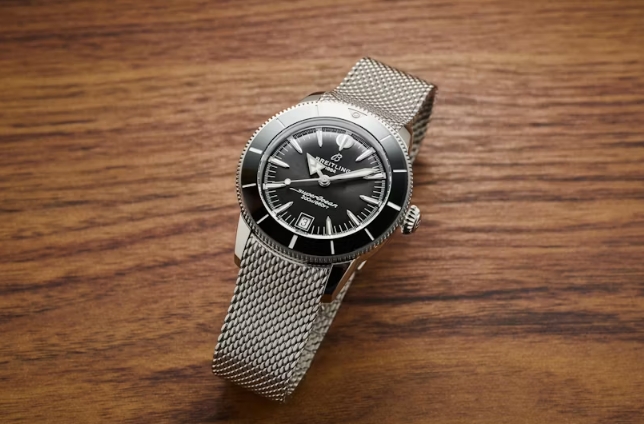
A reliable model description should say where its evidence stops. Published imagery may show a pusher, crown guard, display window or clasp, but cannot demonstrate the quality of parts behind those features. Assessing a working chronograph or water resistance would call for an inspection that the article does not claim to have performed.
The dial should be examined in relation to the bezel, not as an isolated picture. If the printed indices look crowded against the edge, the inner dial opening may be too small. If the hands are too broad, they can compete with the markers and distort the balance. On a lighter-toned dial these differences become especially visible because there is less dark background to conceal changes in spacing.
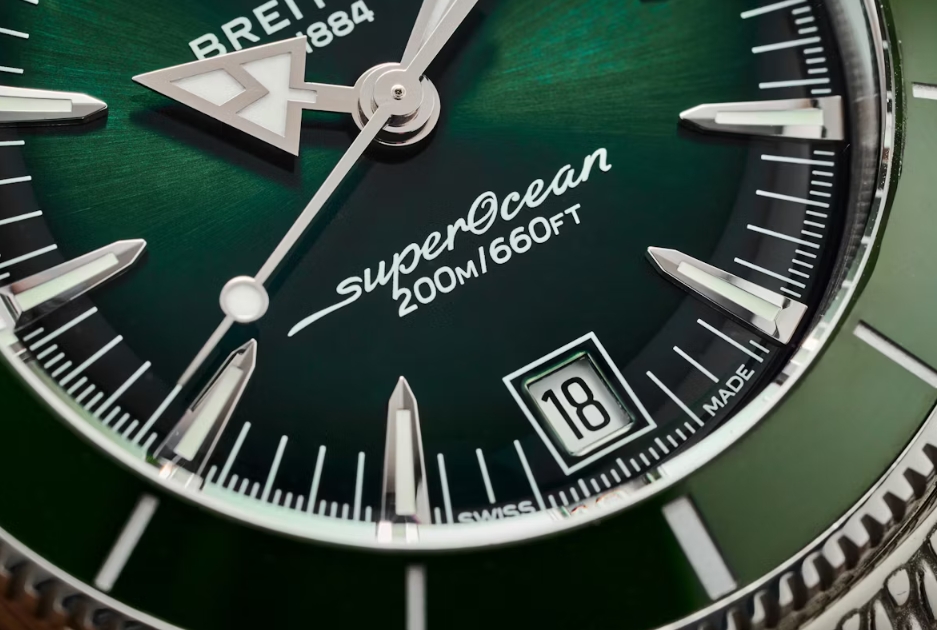
These details become clearer beside other articles in Breitling Superocean. A series archive is useful here because one attractive photograph cannot show how this reference differs from the rest of the family.
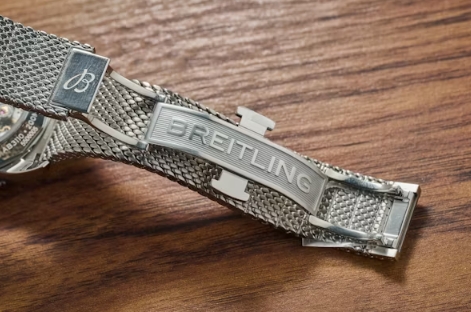
A mesh-style bracelet or a fitted strap changes the entire character of a Heritage watch. Look closely at the end-link connection and at how the case sits above the strap. A precise fit can visually integrate the components; a gap makes the watch appear assembled from unrelated parts. Surface reflections should be judged cautiously, since studio lighting can exaggerate polished metal and hide imperfections.
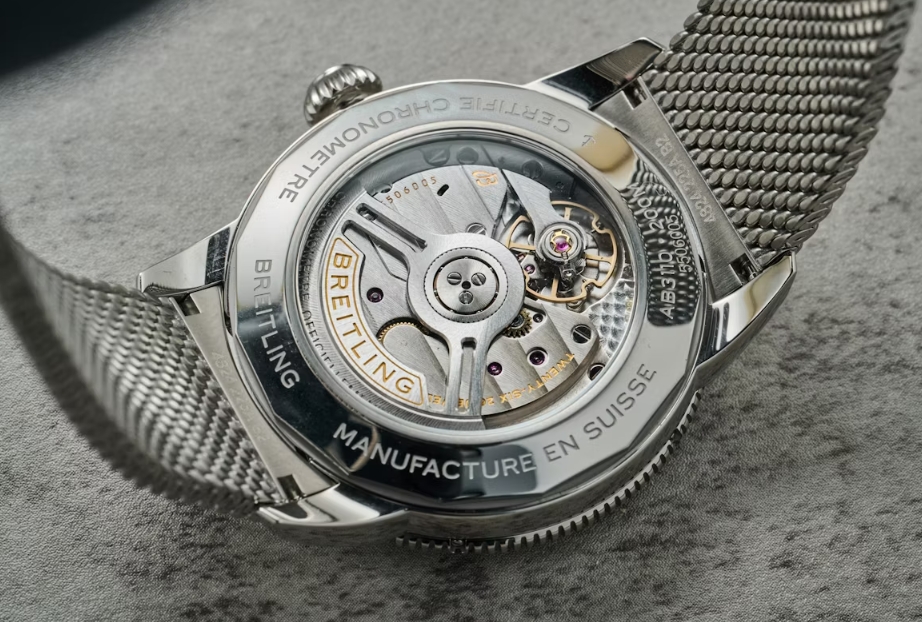
The original watch’s movement, materials and claimed water resistance cannot be assumed to apply to any replica. Pressure testing, crown construction and gasket quality are especially important for a diver, and none can be verified simply because the dial says a certain depth. This is a design analysis, not a water-resistance certificate or a report of first-hand underwater use.
This article forms part of the CheapBreitlingSale editorial homepage, where comparisons across Breitling collections make the distinction between design and verifiable construction easier to see. The visual details above matter more than a general grade assigned to an imitation.
Readers looking at other diameters can compare the Heritage 40 with models in the Breitling Superocean archive. The site’s wider Breitling replica coverage also makes the contrast with the Navitimer and Chronomat clearer: each family uses its bezel, case and dial for a different visual purpose.
A watch is not just the sum of named components. The minute track needs to sit convincingly with the hands, the markers should have an intentional relationship to the bezel, and the case should not appear broader merely because the dial opening is too small. This is an observable design question rather than a claim about internal specifications.
The value of the Heritage 40 as an editorial subject is that its apparent simplicity makes proportional accuracy harder to overlook. There is little visual clutter to distract from an incorrect bezel width, inconsistent markers or the join between case and bracelet.
